Definition: Metering Operator
A metering operator (German: Messstellenbetreiber, MSB) is a company that, under the German Metering Point Operation Act (Messstellenbetriebsgesetz, MsbG), is responsible for the installation, operation, maintenance and reading of metering systems. It ensures that energy consumption or energy generation at a connection point is measured correctly and that the data is transmitted to the responsible market participants (grid operators, energy suppliers, balancing group managers).
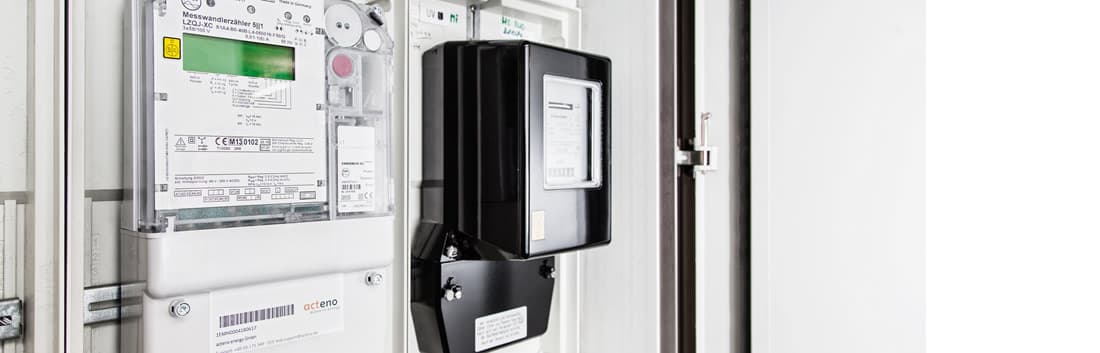
Metering operations cover not only the hardware (meters, instrument transformers, communication technology), but also data processing, market communication and ensuring data security.
Default vs. Competitive Metering Operator
Since the liberalization of metering in Germany, a distinction has been made between two types of metering operator:
Default Metering Operator (gMSB)
- Usually the local distribution system operator
- Takes over automatically if no wMSB is chosen
- Standard services, limited data access
- Data primarily for billing, not for optimization
Competitive Metering Operator (wMSB)
- Independent of grid operator and energy supplier
- Actively chosen by the customer
- Real-time access, open interfaces, individual metering concepts
- Data for optimization, forecasting and energy management
Legal Basis: The Metering Point Operation Act (MsbG)
The MsbG came into force on September 2, 2016 as part of the Act on the Digitization of the Energy Transition. It regulates metering operations as a separate sector within the electricity and gas supply networks and defines:
- Technical standards for digital metering systems
- Financing models for the smart meter rollout
- Data protection and data security (BSI certification)
- The right of customers to freely choose their metering operator
The amended version of the MsbG came into force on May 27, 2023 and accelerated the rollout of smart metering systems.
How Does Switching the Metering Operator Work?
Placing the Order
You engage a competitive metering operator such as acteno energy. We review your requirements and prepare an individual quote.
Coordination
We take care of communication with the previous metering operator and the grid operator. You do not have to worry about anything.
Installation
Our technicians install the new metering technology at your sites – on schedule and without interrupting your supply.
Operation
From now on, you have real-time access to your energy data. We take care of operation, maintenance and market communication.
What Metering Systems Are Available?
Various types of metering systems are used in Germany:
Load Profile Meter (RLM)
For consumers from 100 MWh/a or producers from 100 kWp. Records active energy and reactive energy in 15-minute intervals.
Smart Metering System (iMSys / Smart Meter)
For customers up to 100 MWh/a or producers up to 100 kWp. Digital recording with a gateway certified by the German Federal Office for Information Security (BSI) for secure data transmission.
Modern Metering Device (mME)
Digital meter without a network connection. Stores data locally for up to two years, but cannot transmit data.